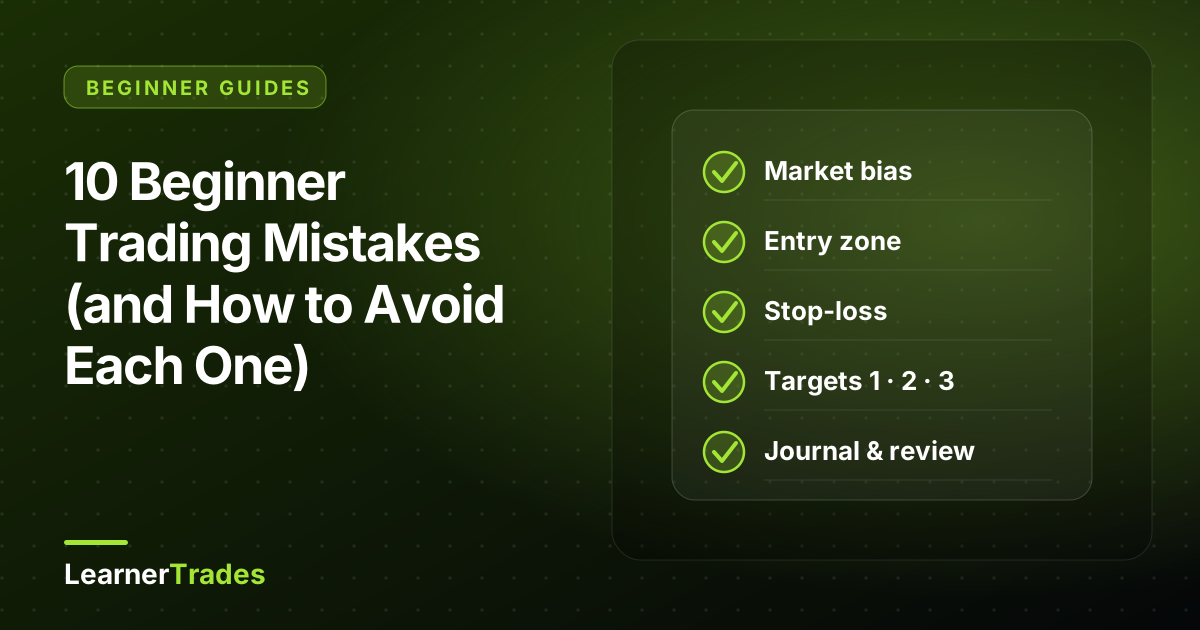
You do not need a perfect strategy to survive as a beginner. You need to avoid the mistakes that end accounts early. Here are the ten that matter most.
1. Trading without a stop-loss
A trade without a stop has unlimited downside. Fix: decide the stop before you enter, and never widen it.
2. Risking too much per trade
Risking 10% a trade means a short losing streak can wipe you out. Fix: risk a small fixed percentage (many traders use 1% or less). See position sizing.
3. Overusing leverage
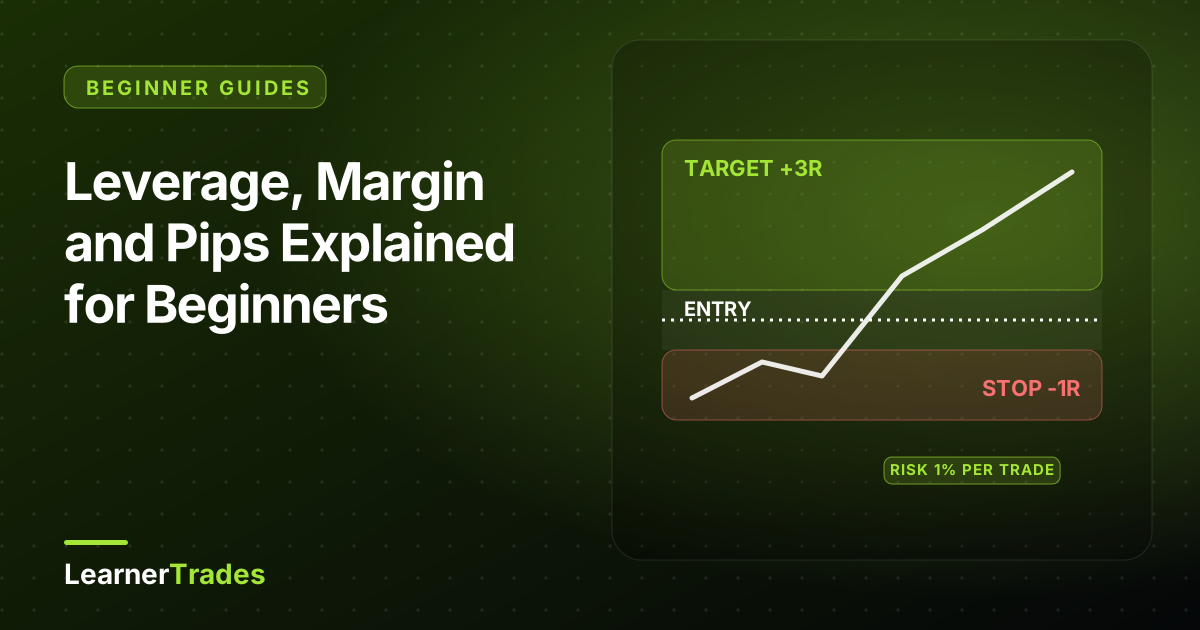
Maximum leverage is a limit, not a target. Fix: size from your stop and risk percentage, as explained in leverage, margin and pips.
4. Overtrading
More trades are not more profit. Each extra trade adds spread cost and decision fatigue. Fix: set a daily maximum number of trades and only take setups from your plan.
5. Revenge trading
Trying to win back a loss immediately leads to bigger positions and worse decisions. Fix: set a daily loss limit; when you hit it, stop for the day. See trading psychology.
6. Chasing signals and strategies
Jumping from one system to another prevents you from learning any. Fix: pick one simple strategy and test it for at least 50 trades before judging it. Treat any signal as an idea, see how to evaluate a signal provider.
7. Ignoring risk-to-reward
A good setup with a bad ratio is a bad trade. Fix: take trades where the target is at least twice the stop distance.
8. Trading against the trend
Fighting the higher-timeframe direction is hard. Fix: identify the trend first with market structure, and look for entries in its direction.
9. Trading around major news unprepared
Spreads widen and price whipsaws on releases. Fix: check an economic calendar daily; see how to trade CPI, NFP and Fed decisions.
10. Not keeping a journal
Without records you repeat the same errors. Fix: log every trade (setup, entry, stop, target, result, emotion) and review weekly.
A simple starter routine
- Check the higher-timeframe trend.
- Mark key levels.
- Wait for your setup; skip the trade if it is not there.
- Calculate the position size from the stop.
- Place the stop and the target.
- Journal the trade.
Related guides
- Forex trading for beginners
- Trading psychology
- Risk management and position sizing
- Leverage, margin and pips
Sources and further reading
These are independent official or research sources. Learner Trades is not affiliated with them.
Frequently asked questions
Why do most beginners lose money trading?
Mostly because of risk and behaviour rather than analysis: positions that are too large, no stop-loss, overtrading, and emotional decisions after losses.
How long does it take to become consistently profitable?
There is no fixed timeline, and some traders never get there. Treat the first year as education and focus on following your process and protecting capital.
Should I use a demo account first?
Yes. A demo account lets you test your plan and learn the platform without risking money. Treat it seriously, with the same position sizing you would use live.