Everything in our market structure, liquidity and risk management guides applies to gold (XAU/USD) and to major cryptocurrencies. What changes is the scale of movement and the rhythm of the market. Traders who carry forex habits into these markets without adjusting get the same lesson every time: the setup was right, the stop was too tight, the size was too big.
Volatility in numbers
A rough comparison of typical daily ranges:
- EUR/USD: 0.5–0.8% (50–80 pips)
- XAU/USD: 1–2% ($25–$50 on a $2,500 price)
- BTC/USD: 2–5%
- ETH/USD and large alts: 3–8%
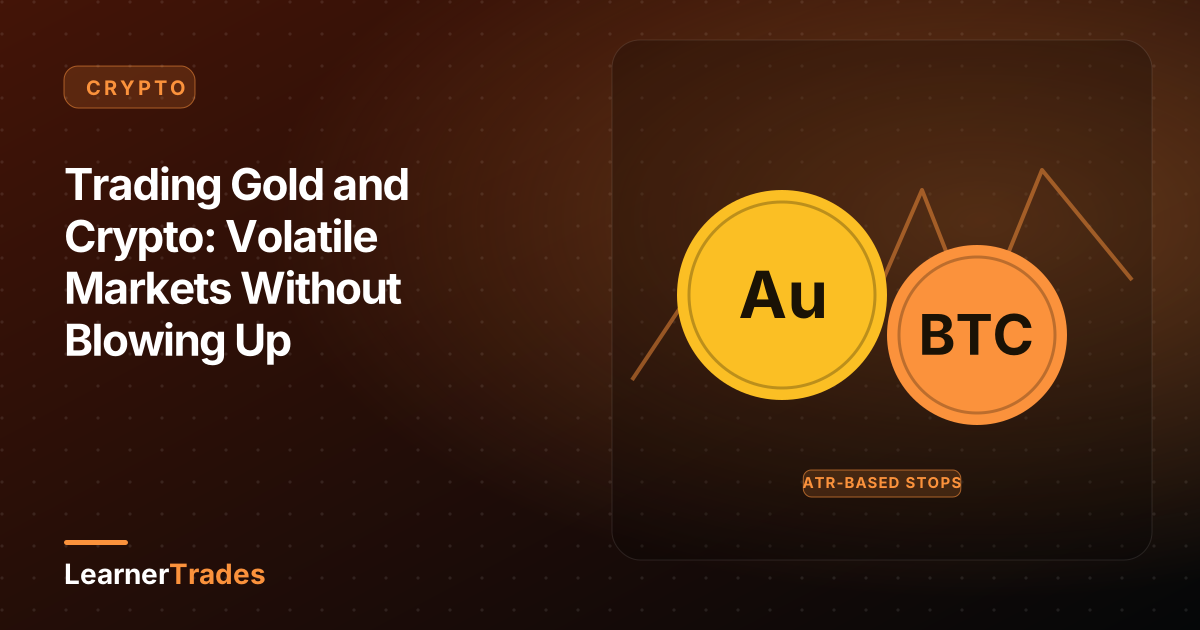
A stop that is "20 pips" in forex thinking is meaningless in gold and suicidal in Bitcoin. The fix is to think in ATR (Average True Range): measure the market's own recent volatility and set stops and targets as multiples of it.
ATR-based stops and targets
Use the 14-period ATR on your entry timeframe.
- Stop: beyond structure and at least 1 × ATR from entry. If the structural stop is closer than 1 ATR, it is inside the noise; wait for a better location or use the ATR stop.
- First target: at least 1.5–2 × ATR, and at a real level.
- Time stop: if a crypto trade has not moved 0.5 × ATR in your favour within a handful of candles, the momentum you expected is not there.
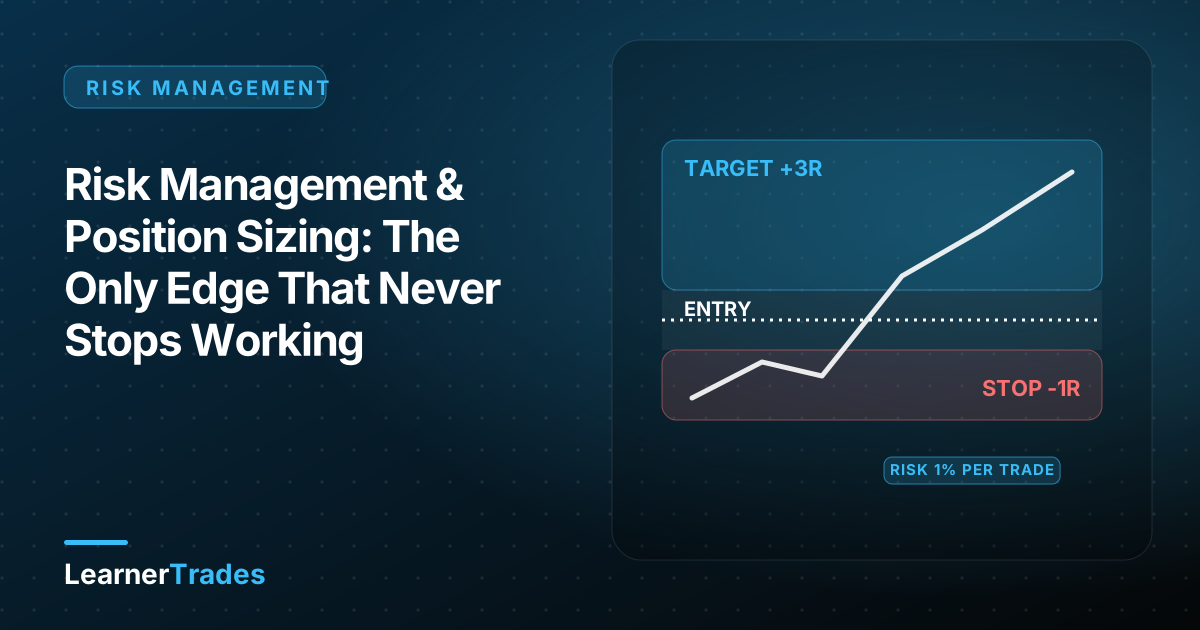
Because stops are wider in absolute terms, position size must come down proportionally — the risk management formula handles this automatically if you use it. A 1.5% stop on BTC with 1% risk means position value is two-thirds of equity, not ten times it.
Gold: the macro-driven market
Gold responds to real interest rates, the US dollar and risk sentiment more than to its own supply and demand. Practical implications:
- It trades like a currency pair against USD. Strong DXY days are usually weak gold days; watch the dollar and US 10-year yields alongside the gold chart.
- US data releases move it violently. CPI, NFP and FOMC produce $20–$40 spikes within minutes. We are flat into those events and trade the post-release structure.
- Sessions matter. The London open and the London–New York overlap carry most of the range. Asian-session gold is usually a tight range, and like forex, that range is London's liquidity target.
- Round numbers are powerful. $50 and $100 increments attract stops and option interest.
Structure-wise, gold respects supply and demand zones and liquidity sweeps exceptionally well, which is why it features regularly in our signals.
Crypto: the 24/7 market with a leverage problem
Crypto never closes, but it is not uniformly tradable:
- Highest liquidity: during the US session, especially around the US equity open (13:30 UTC) — BTC has become increasingly correlated with risk assets.
- Lowest liquidity: weekends and late US evening. Thin books mean exaggerated wicks and stop hunts. We reduce size or stay flat on weekends.
- Daily, weekly and monthly opens are meaningful levels that institutional crypto desks watch closely; the weekly open (Monday 00:00 UTC) is a reliable magnet.
Funding and liquidations
Most crypto volume is in perpetual futures, which introduces two forces forex does not have:
- Funding rate. When longs are crowded, funding turns strongly positive and longs pay shorts every eight hours. Extreme funding is a contrarian signal: crowded trades get unwound violently.
- Liquidation cascades. Over-leveraged positions are force-closed when price moves against them, which pushes price further, triggering more liquidations. This is why crypto produces 5% candles in minutes. Liquidation levels cluster just beyond obvious highs and lows — the crypto version of liquidity pools, and far larger.
We read funding and open interest before publishing a crypto signal. A long idea into crowded-long funding needs more confluence; a long after a liquidation flush that reclaims structure is one of the best setups the market offers.
Correlation inside crypto
BTC leads; most alts follow with higher beta. A long ETH and a long SOL are not two trades, they are one BTC trade with extra variance. Treat the whole crypto book as a single correlated position for risk purposes, and check BTC dominance — rising dominance usually means alts underperform even when BTC is flat.
The adapted checklist
In addition to the standard pre-trade checklist:
- Stop distance ≥ 1 × ATR(14) on the entry timeframe.
- Size recalculated with the wider stop (never carried over from forex).
- No US high-impact data in the next 30 minutes (gold) / not a thin weekend session (crypto).
- Funding and open interest checked (crypto).
- Total crypto exposure counted as one position.
Related guides
- What moves gold prices
- Bitcoin trading guide
- Risk management and position sizing
- Forex sessions and best times to trade
Frequently asked questions
Is gold or crypto better for beginners?
Neither is ideal for a complete beginner; both move much faster than major forex pairs. If you trade them, cut your usual risk per trade in half until you have a track record, use ATR-based stops, and avoid trading during US data releases on gold and during weekend thin liquidity on crypto.
How do I set a stop loss on Bitcoin?
Use structure first (below the swing low or demand zone), then check that the stop distance is at least one Average True Range on your entry timeframe. BTC regularly wicks 1–2% intraday; stops tighter than that are noise and will be hit without the thesis being wrong.
What are funding rates in crypto?
Funding is a periodic payment between long and short perpetual-futures traders that keeps the contract price near spot. Strongly positive funding means longs are crowded and paying shorts; extremes often precede sharp reversals as over-leveraged positions get liquidated.