Bitcoin is the largest crypto asset and the market most traders start with. It never closes, it can move several percent in an hour, and a large share of volume is leveraged. That mix rewards preparation and punishes impulsiveness.
What actually moves Bitcoin
Liquidity and risk appetite
Bitcoin tends to rise when money is cheap and investors are comfortable taking risk, and to struggle when liquidity tightens. Macro events such as Fed decisions and inflation data therefore spill into crypto.
Spot ETF and institutional flows
Regulated products give traditional investors access to Bitcoin. Sustained inflows can add steady demand, while outflows can add pressure, especially around US trading hours.
The halving cycle
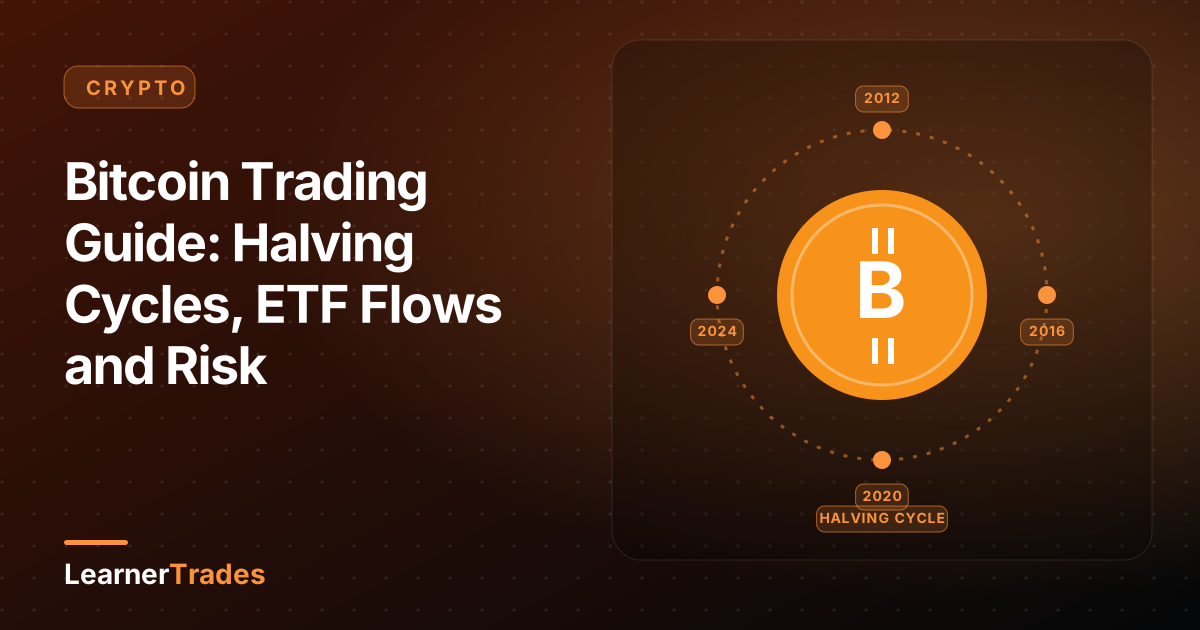
About every four years the new-supply rate is cut in half. Many traders watch the cycle, but each cycle has differed in size and timing, so treat it as context, not a signal.
Leverage, funding and liquidations
When too many traders lean the same way with leverage, a small move can force them to close, which pushes price further and triggers more closures. These liquidation cascades explain many of the sharpest crypto candles.
Building a plan for a 24/7 market
- Define the invalidation first. Where is the idea wrong? Put the stop beyond that level, not at an arbitrary percentage.
- Check the stop against ATR. Bitcoin regularly wicks 1-2% intraday. A stop tighter than normal noise will be hit without the idea being wrong.
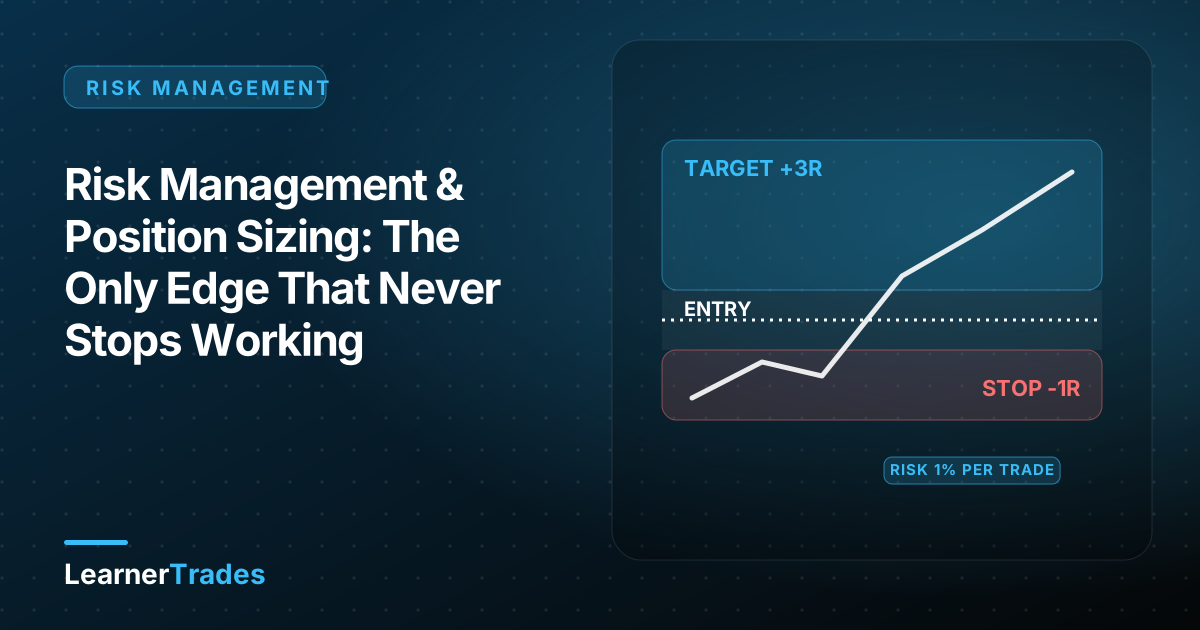
- Size the position from the stop. Risk a small, fixed fraction of the account. Wider stops mean smaller positions.
- Be careful with weekends. Liquidity is thinner and moves can be erratic.
- Avoid revenge trading. Fast markets tempt you to "win it back". Decide your daily loss limit in advance.
For the full framework see our guides on risk management and position sizing and trading gold and crypto.
Related guides
- Trading gold and crypto volatility
- Risk management and position sizing
- Trading CPI, NFP and Fed decisions
- Forex sessions and best times to trade
- Bitcoin (BTC/USD): live price, drivers and trade ideas
Sources and further reading
These are independent official or research sources. Learner Trades is not affiliated with them.
Frequently asked questions
What is the Bitcoin halving?
Roughly every four years (every 210,000 blocks) the reward miners receive per block is cut in half, slowing the creation of new bitcoin. The most recent halving took place in April 2024, reducing the reward to 3.125 BTC. Past cycles are not a guarantee of future price behaviour.
What are funding rates?
On perpetual futures, funding is a periodic payment between longs and shorts that keeps the contract near spot. Very positive funding signals crowded longs; extremes often precede sharp liquidation-driven reversals.
Is it safe to use leverage on Bitcoin?
High leverage is the most common way traders are liquidated. If you use leverage at all, keep it low, always use a stop-loss and risk only a small percentage of your account per trade.