Trading Gold and Crypto: Volatile Markets Without Blowing Up
Gold and Bitcoin move several times faster than EUR/USD. The structure still works — but the sizing, the stop placement and the session timing all have to change. Here is how we adapt.

Bitcoin trades 24/7 and regularly moves 1-3% in a day, with larger swings around news and liquidations. That makes it attractive and dangerous in equal measure: leverage turns normal volatility into forced exits.
We treat BTC like any other market: trade the structure, define the invalidation first and size the position so a stop-out is a small, planned loss.
Prices are indicative and for information only. Your broker's prices may differ.
Bitcoin tends to rise when global liquidity is plentiful and risk assets are bid, and to fall when funding tightens.
Inflows and outflows in regulated products influence demand, especially on US trading hours.
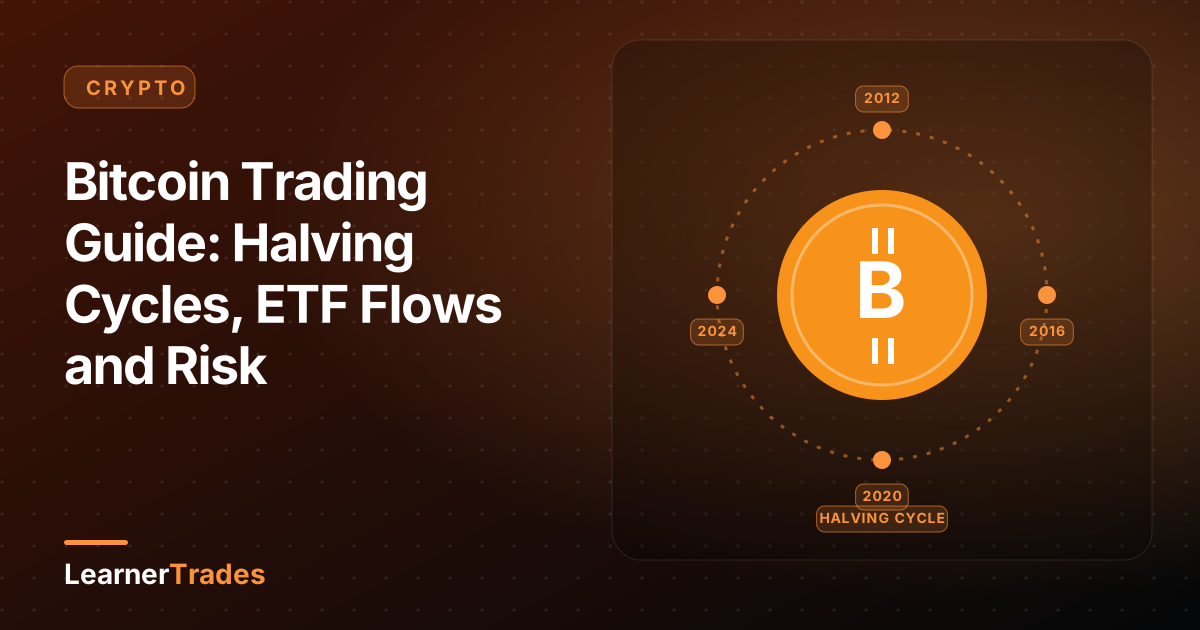
Roughly every four years the block reward is cut in half, reducing new supply. Many traders track the cycle, though past cycles are not a guarantee.
Crowded long or short positioning in perpetual futures can trigger liquidation cascades in either direction.
Crypto never closes, but liquidity is thinner on weekends and spreads can widen. Moves often start around the US session open and on macro releases.
It is a younger, smaller market than forex or gold, trades around the clock, and has a large share of leveraged participants whose forced liquidations amplify moves.
Place it beyond a meaningful swing low or high and make sure the distance is at least one ATR on your timeframe, otherwise ordinary noise will stop you out. Then reduce size to fit your risk.
No. Everything on this site is educational. Crypto is high risk and you can lose your entire stake, so only risk money you can afford to lose.
Gold and Bitcoin move several times faster than EUR/USD. The structure still works — but the sizing, the stop placement and the session timing all have to change. Here is how we adapt.
Bitcoin trades 24/7 and punishes over-leverage. Understand liquidity, the halving cycle, ETF flows and funding rates, then build a risk plan that survives the swings.
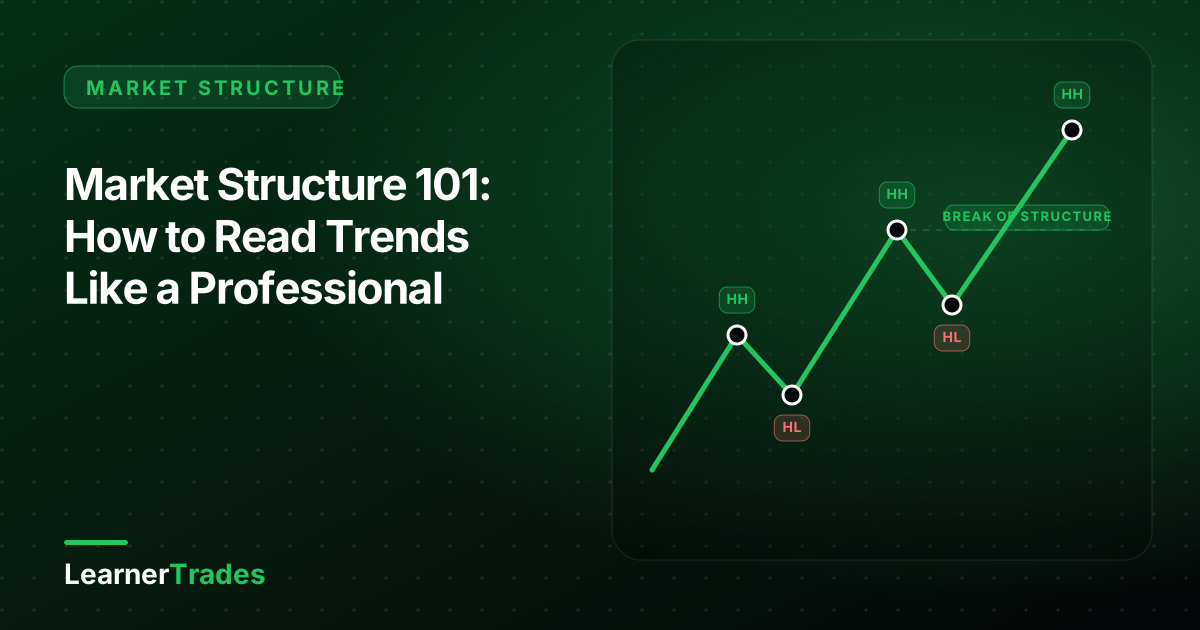
Before indicators, before patterns, there is structure. Learn how swing highs and lows define a trend, how to spot a genuine break of structure, and why most retail traders get the trend wrong.