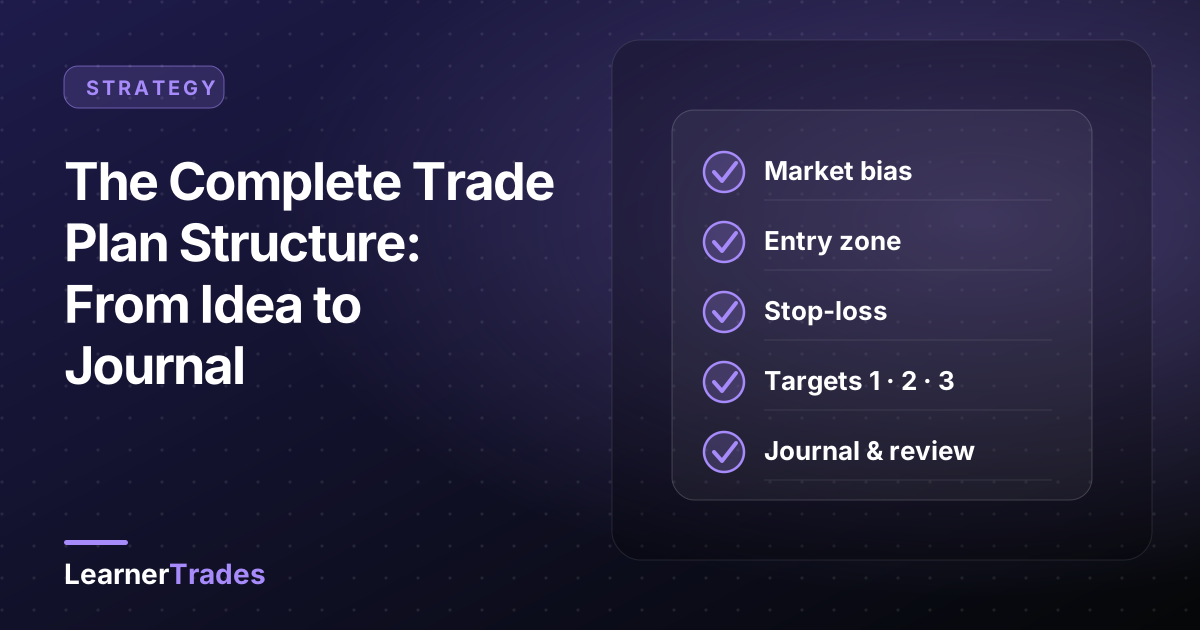
Professional trading is boring in the best way: the same checklist, the same sizing, the same management rules, trade after trade. Signals — ours or anyone's — are a useful input into that process, never a replacement for it. Here is the full structure, start to finish.
1. The thesis
Every trade starts with one sentence: "I expect X to happen because Y, and I am wrong if Z." For example: "I expect GBP/USD to continue higher because the daily structure is bullish and price is reacting at a fresh 4-hour demand zone; I am wrong if we close below 1.2600."
If you cannot write that sentence, you do not have a trade. You have an urge.
2. Context
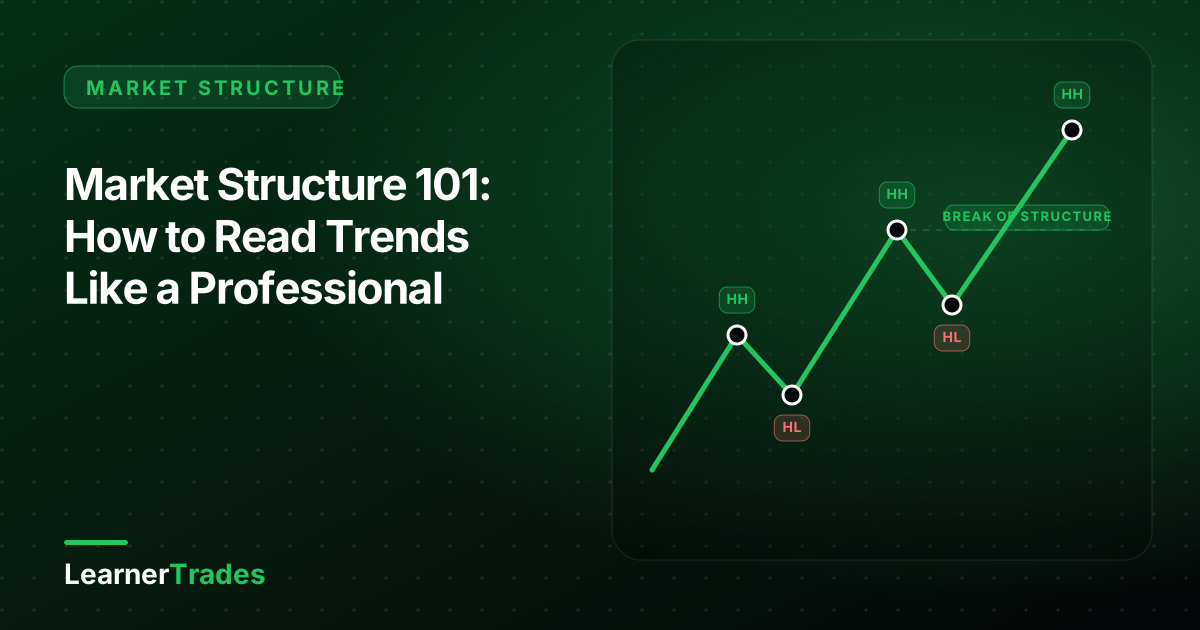
- Higher-timeframe bias: daily/4H structure direction and the last protected swing.
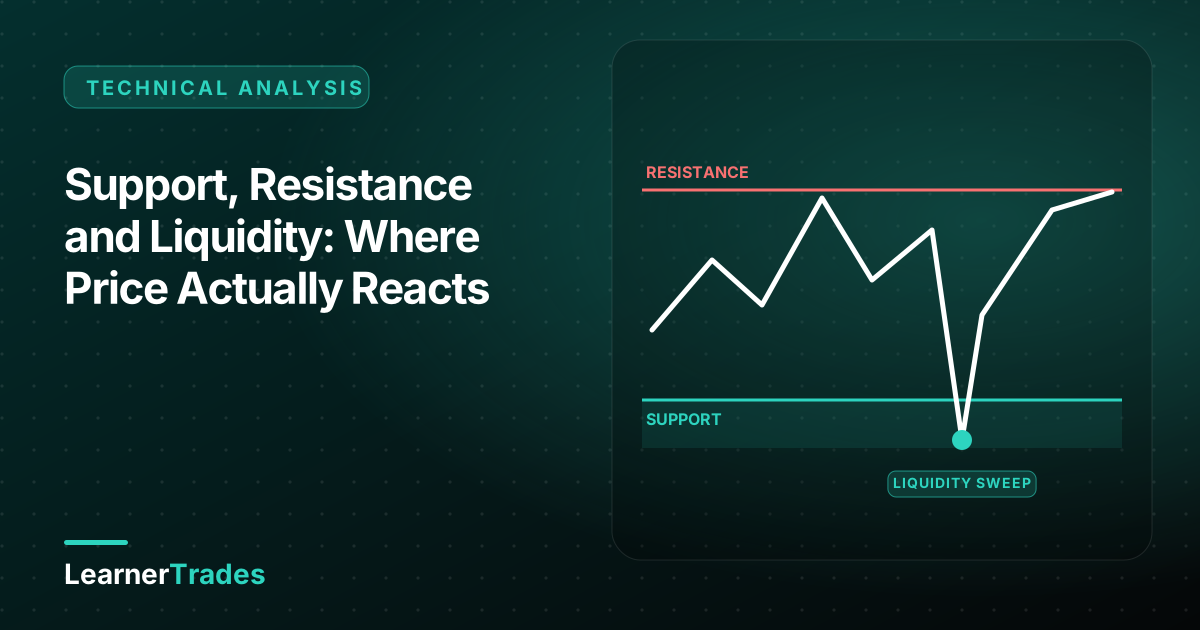
- Location: which zone or level is price at, and how strong is it?
- Catalysts: scheduled news in the next few hours (central bank decisions, CPI, NFP). Avoid opening new positions within 30 minutes of a high-impact release unless that is specifically your strategy.
- Correlations: what are DXY, yields, risk sentiment, BTC dominance doing? Does the broader picture support the thesis?
3. Levels
Define four numbers before anything else:
- Entry zone — a range, not a price. Market orders chase; limit orders inside the zone are usually better.
- Invalidation (stop) — the price at which the thesis is wrong. Beyond the structure, not inside it.
- Targets — the next opposing zone, prior high/low, or liquidity pool. Up to three.
- Minimum reward-to-risk — we require at least 1:1.5 to the first target and 1:3 to the final target, otherwise the trade is skipped.
4. Risk and size
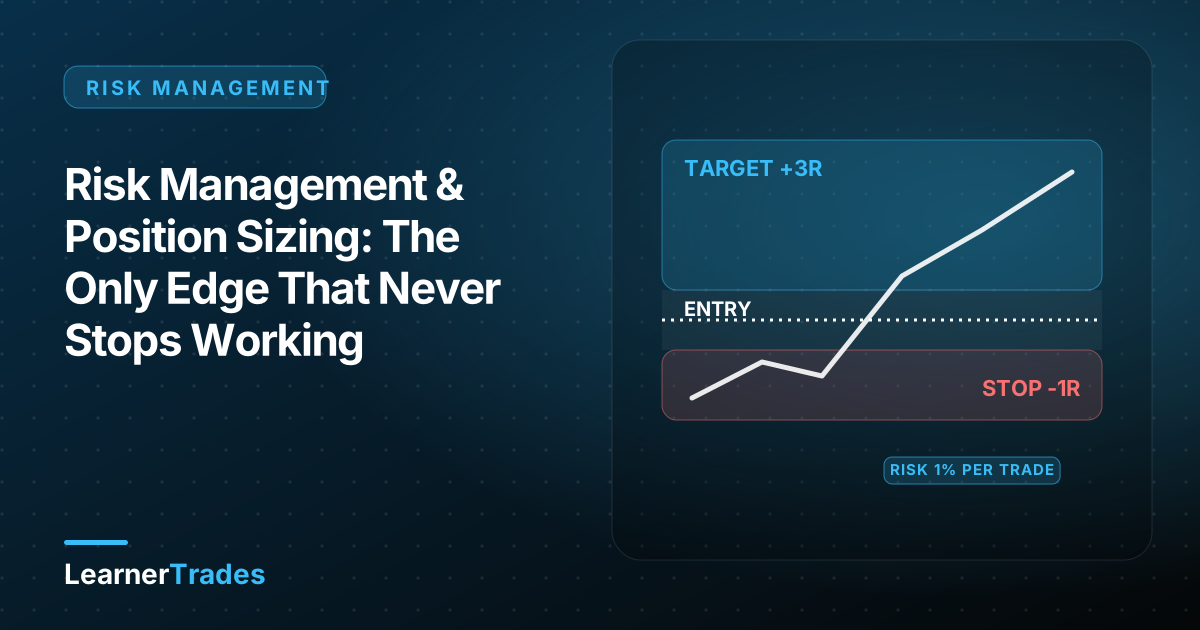
Apply the sizing formula from our risk management article. Check correlated exposure. Check your daily and weekly loss limits. If the loss limits are hit, the answer is no regardless of how good the setup looks.
5. The pre-trade checklist
Read this out loud before every entry. It takes 20 seconds and saves accounts.
- Higher-timeframe bias agrees with the trade direction.
- Price is at a strong, fresh zone with confluence.
- Lower-timeframe trigger (CHoCH or sweep-and-reclaim) has printed.
- Stop is beyond structure and the stop distance is acceptable.
- Reward-to-risk meets the minimum.
- Size calculated; total open risk within limits.
- No high-impact news in the next 30 minutes.
- I am calm, not revenge-trading, not bored-trading.
Any "no" means wait.
6. Execution rules
- Entry type: limit at the zone, or market on the trigger candle close — decide in advance and write it down.
- Expiry: if the limit is not filled within a defined time (for example, one session), cancel it. Setups go stale.
- Slippage tolerance: if price has already moved more than one-third of the way to TP1 before you can enter, skip. Chasing turns a 1:3 trade into 1:1.
Signals from this site show the price at delivery time precisely so that you can make this judgement.
7. Management rules
Decide these before entry and do not renegotiate with yourself mid-trade:
- Partial at TP1, stop to breakeven.
- Partial at TP2, trail the stop below the last swing low (for longs).
- Time stop: if the trade has not moved in your favour within N candles of the entry timeframe, consider closing — ideas that work usually work quickly.
- Never widen the stop. Never add to a loser.
8. The journal
What gets measured gets improved. Minimum fields:
| Field | Example |
|---|---|
| Date / session | 2026-03-14 London |
| Pair & direction | EUR/USD long |
| Setup type | HTF demand + LTF CHoCH |
| Entry / stop / targets | 1.0870 / 1.0845 / 1.0950, 1.1000 |
| Planned R:R | 3.2 |
| Size & risk | 0.2 lots, 1% |
| Outcome (R) | +2.1R |
| Followed plan? | Yes |
| Emotional state | Calm / FOMO / revenge |
| Lesson | Entered on first touch; wait for trigger |
Add a screenshot at entry and at exit. Review weekly: which setups, sessions and pairs produce positive expectancy, and which produce losses? Cut the losers from your playbook. This is where real edge comes from — not from a new indicator.
9. Review cadence
- Daily (5 min): did I follow the plan? Nothing else.
- Weekly (30 min): expectancy by setup type, mistakes, one thing to improve.
- Monthly (1 hour): drawdown, risk settings, whether to scale size up or down.
Related guides
- Risk management and position sizing
- Trading psychology
- Market structure explained
- 10 beginner trading mistakes
Frequently asked questions
What should a trade plan include?
A complete trade plan includes the market thesis, the entry zone, the invalidation (stop) level, targets, position size, the conditions that must be true before entering, how the trade will be managed after entry, and how it will be reviewed afterwards.
How do I use trading signals properly?
Treat a signal as a structured hypothesis, not an instruction. Check that it agrees with your own higher-timeframe view, size the position by your own risk rules, and only enter if the price is still within a reasonable distance of the published entry. If you cannot explain why the trade should work, skip it.
What should I write in a trading journal?
Record the setup type, timeframes, entry, stop, target, size, outcome in R-multiples, your emotional state, and whether you followed your plan. Review weekly to find which setups and conditions actually make money.